
I recently wrote this band 8-8.5 essay for a task from Cambridge IELTS Academic 20. The essay was written on a laptop in about 25 minutes, and I then spent about 10 minutes editing and revising it. No editing apps, AI tools, or dictionaries were used in the process.
Marking was done by a qualified IELTS writing trainer, as well as ChatGPT and Perplexity. The AI agents were properly trained using the updated IELTS writing band descriptors and model answers from Cambridge IELTS series of books.
These days, if people have health problems, many do not visit doctors. They try to get better at home by themselves.
Is this a positive or negative development?
Many individuals nowadays attempt to manage health issues personally rather than visit physicians. This trend is spreading worldwide with both positive and negative outcomes, though the latter seem more pronounced.

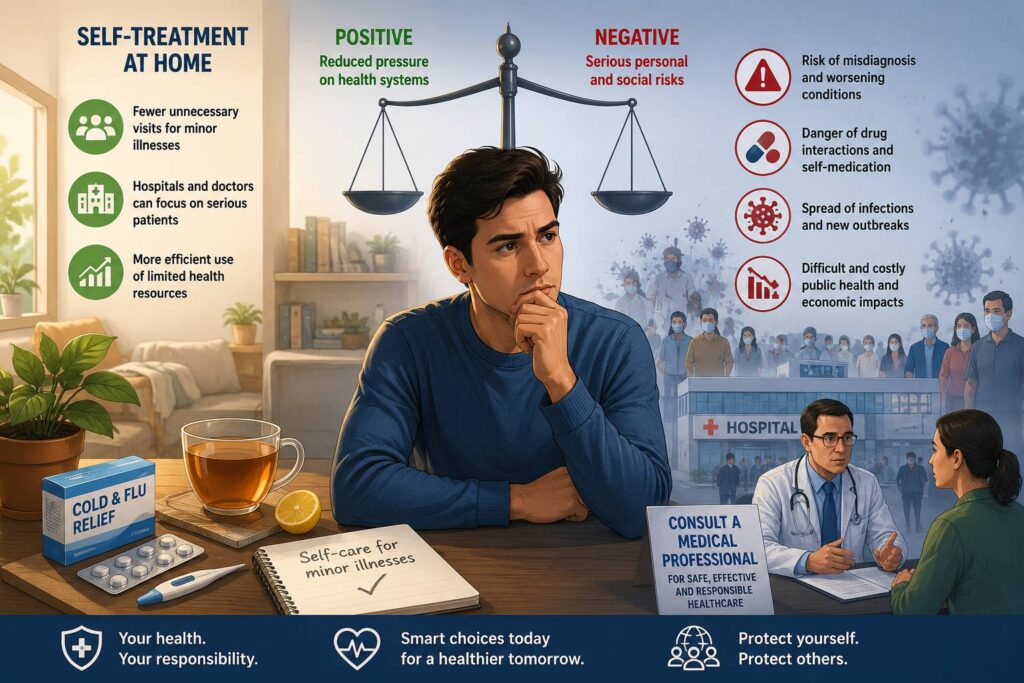
On the plus side, there is reduced pressure on health systems. Considering the costs and complexities involved in training health experts and providing equipment and facilities, many countries face serious shortages in these fields. Hospitals, clinics or even individual doctors in these countries are overwhelmed by the number of patients, many of whom suffer from minor issues like cold or flu that can be easily treated with home remedies or over-the-counter drugs. A reduction in patient load would allow them to tend to the needs of patients with more serious conditions like cancer with increased efficiency and focus.

However, trying to treat medical conditions can be positively dangerous for anyone without proper medical training. Lacking up-to-date knowledge of the right procedures and medications for each health condition, one may bring about serious complications and worsen their condition. Most untrained individuals are also unaware of drug interactions, and can suffer horrible consequences when they self-medicate.

The health risks can go beyond the individual. The emergence of novel health issues and viral infections such as Covid-19, SARS or Ebola means new cases need to be traced as soon as possible. If ill people do not seek out medical assistance, they may transmit the pathogens to others more easily. This would make it much more difficult for health authorities to contain the threat of a new outbreak with significant casualties, as well as economic and political repercussions.

I strongly believe the reduced load in the health system is not worth the serious personal and social health risks involved in self-treatment. The sick should definitely seek out the advice of trained medical professionals lest they complicate their conditions or even trigger a new pandemic.

length: 310 words
TR 9 | CC 9 | LR 8 | GRA 9

Task Response: 9
The essay answers the question directly, clearly states from the introduction that the disadvantages outweigh the advantages and maintains that position throughout, reaching a clear conclusion. It develops both sides appropriately before evaluating them, and the supporting ideas are also substantial rather than superficial, for example:
– reduced burden on healthcare systems
– dangers of misdiagnosis
– drug interactions
– public health implications
– disease surveillance
These are all relevant and well-developed. The conclusion also directly answers the question rather than merely summarising. This fits the band 9 descriptor: “The prompt is appropriately addressed and explored in depth… Ideas are relevant, fully extended and well supported.”
Minor weakness: One example (“cancer”) is slightly exaggerated because reducing GP visits for minor illnesses does not necessarily improve cancer treatment directly. But this is too minor to affect the band.
Coherence & Cohesion: 9
The organisation is excellent. Paragraph progression is very natural, and each paragraph has one central idea:
Introduction > Advantage > Personal danger > Social danger > Conclusion
Transitions are varied (On the plus side | However | Most… | This would… | I strongly believe…), and reference is also controlled well (this trend | they | one | this | their). There is no mechanical overuse of linking words.
Paragraphing is textbook band 9. This fully satisfies the descriptor: “The message can be followed effortlessly… Paragraphing is skilfully managed.”
Lexical Resource: 8
Vocabulary is excellent overall, with good topic-specific vocabulary throughout (overwhelmed, home remedies, over-the-counter drugs, complications, drug interactions, self-medicate, pathogens, contain the threat, repercussions, …). However, there are several word-choice issues that prevent band 9:
1. “positively dangerous”: This expression exists in British English for emphasis, but sounds somewhat literary and unnatural in an IELTS essay. Simply saying “extremely dangerous” would sound more natural.
2. “horrible consequences”: “Horrible” is rather conversational. “Serious consequences” or “severe adverse effects” would be stronger.
3. “trigger a new pandemic”: This is somewhat exaggerated. Self-treatment may delay detection. It does not literally trigger pandemics. This slightly weakens lexical precision.
4. Slight repetition: The essay repeatedly uses “serious”, “conditions”, “health”, and “patients”. The repetition is not excessive but noticeable.
Overall, this matches band 8: “A wide resource is fluently and flexibly used… occasional inaccuracies in word choice and collocation.”
Grammatical Range & Accuracy: 9
There is an excellent range of structures. Examples include relative clauses (many of whom suffer…), participial clauses (Considering the costs…), conditionals (If ill people do not seek…), and complex noun phrases (the emergence of novel health issues…). Subordination is frequent and accurate. All sentences are error-free, there is almost no awkwardness, and sentences are not overburdened.
همه چیزش رو دوست داشتم و کلی ازش یاد گرفتم واقعا. ایده ها در ظاهر خیلی ساده بودن ولی بسط ایدهها واقعا حرفهای بود. به نظرم این یکی نکات بولد این انشاست. مثل همیشه رشک برانگیز
یه سوالی که واسم پیش اومد استفاده از کلمه پاتوژن هست. به نظرتون کمی تخصصی نیست؟ مثلا بهتر نبود به جاش virus یا کلمهای مشابه استفاده بشه ؟
خوشحال میشم نظرتون رو بگین
ارادتمند
❤️
از لطف و فیدبکتون ممنونم استاد عزیز! مساله پاتوژن اینه که محدود به ویروسها نیست.
پریونها، باکتریها، قارچها و انگلهایی مثل کرمها رو هم دربرمی گیره. در اینجا هیچ کلمه دیگری که دقیقا این مفهوم رو برسه نداشتم و بحث پرسیژن برام مطرح بود. بنابراین یا باید مثالهای عوامل بیماریزا رو لیست می کردم، یا از کلمه ای که همون مفهوم رو دقیق برسونه استفاده می کردم.